

Table of Contents
This isn’t a motivational post. If you’re an African looking for remote jobs for africans, you already have the motivation. What you need is a clear, honest picture of how this actually works — the platforms, the payment options, the restrictions, and the path forward from zero.
I’ve spent the last four years helping people in Nigeria, Ghana, Kenya, and Cameroon navigate remote work. Some were total beginners. Others had skills but couldn’t figure out why they kept getting rejected, or why their Payoneer account got flagged. What I’ve learned is that the problems are almost never about talent. They’re about system knowledge.
So let’s get into it properly. This roadmap covers how remote hiring actually works, how to build or package your skills, where to find real jobs, and how to get paid without the headaches.
How Remote Hiring Works (And Why Africans Sometimes Get Filtered Out)
Most people applying for remote jobs treat it like a local job search. Send a CV, wait for a call. That rarely works in international remote hiring, especially from Africa.
Foreign companies — especially those in the US, UK, Canada, and Germany — don’t always know what to expect when they see an application from a Nigerian or Kenyan address. Some worry about time zones. Some have had bad experiences with contractors who disappeared. Others have compliance concerns about hiring internationally. None of this is fair, but it is real.
The good news: it’s a system problem, which means it has system solutions. The companies that hire remotely and successfully work with Africans have figured out clear evaluation criteria. Once you understand what they’re looking for, you can position yourself to meet it.
What remote employers actually care about
They want to see:
- Work samples or a portfolio — not just a list of responsibilities
- Evidence that you can communicate asynchronously (clear writing, prompt replies)
- A time zone overlap they can work with — usually 4–6 hours minimum
- Some proof you’ve delivered results, not just held a role
This is true whether you’re applying for a remote job on LinkedIn or bidding on Upwork. The underlying question is always: can I trust this person to do the work, independently, without daily hand-holding?
NOTE ON HIRING BIAS Some platforms and companies do filter by location in ways that are arbitrary. That’s a real barrier. It doesn’t mean every door is closed — it means you have to be more deliberate about which doors you knock on. Platforms and companies that already have African contractors on their rosters are much better bets than those that don’t.
Building Skills Without Experience: A Realistic Path
Let’s be direct: if you have no portfolio, no samples, and no measurable output to show — you’re not ready to apply yet. That’s not discouraging, it’s just true. The fastest way to change that situation is to create work, not to keep studying.
A lot of people spend six months doing online courses and still can’t get their first client because they never made anything. The employers don’t want to see your certificate. They want to see the thing you built.
For designers and creatives
Pick one software — Figma for UI/UX, Adobe Premiere or DaVinci Resolve for video — and go deep on it. Then do three to five spec projects. Redesign a local business’s website. Edit a YouTube video for a small creator. Create social media templates for a fictional brand. These go in your portfolio. They’re real work, even if they weren’t paid.
For writers and virtual assistants
Start a blog or a Substack. Write ten posts on topics you know. This creates real evidence of your voice, your ability to meet deadlines, and your consistency. For VAs, document the systems you know: Notion, Trello, Google Workspace, calendar management. A one-page “what I can do” document with tools listed goes a long way.
For developers
Your GitHub is your CV. Nothing else matters as much. Put projects there. Open source contributions, even small ones, help. If you’re frontend, build two or three complete interfaces that are live and linkable. If you’re backend, write clear README files explaining what your projects do.
“The number one mistake I see is people who are genuinely skilled but have no proof of it anywhere online. If I can’t verify your work in sixty seconds, I move on — and so will a hiring manager in Chicago.”
Where to Find Remote Jobs for Africans (That Actually Work)
Not every platform is equally accessible from Africa. Some have verification issues. Some have lower competition than others. Here’s a practical breakdown:
Upwork
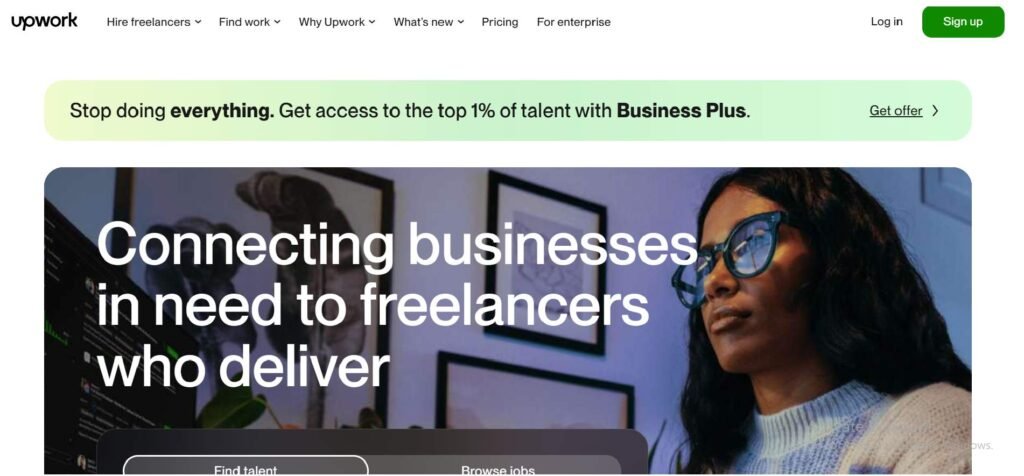
Large, competitive, but workable. Best for developers, writers, and designers. Getting your first contract is the hardest part — your proposals matter more than your profile at the start. Be specific in your bids. Generic proposals get ignored.
Fiverr
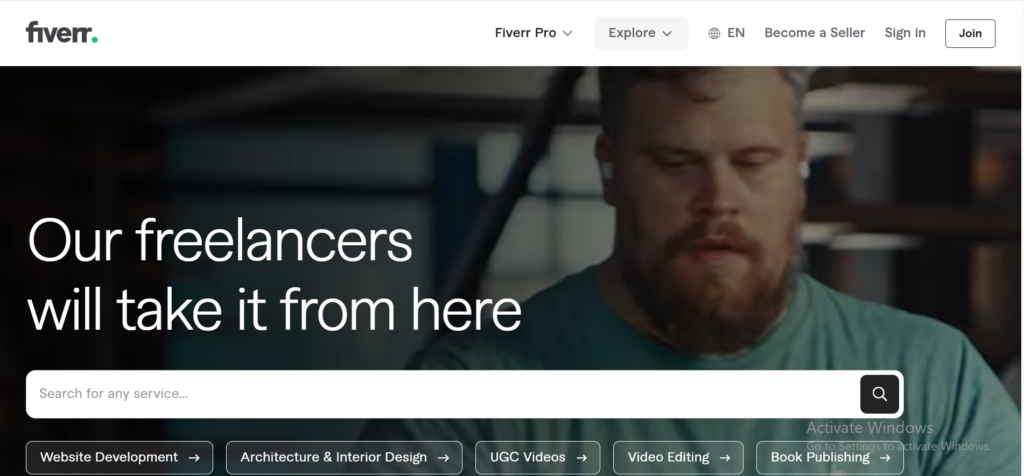
Better for packaged services with clear deliverables: voice-over, design templates, SEO writing. African sellers do well here once they get their first few reviews. The key is a clean, specific gig title that matches how buyers search.
Remote OK and We Work Remotely
Async-first companies post here regularly. Many explicitly hire globally. Good for developers and marketers with one to three years of experience. Bookmark both and check weekly.
Underused by beginners but powerful. Set your location field to “Remote” and filter job searches for companies with existing African employees. Cold outreach to hiring managers here works better than submitting applications into the void.
Andela, Outsized, and Gebeya
These platforms specifically connect African talent with global companies. Lower friction on verification and payment. If you’re a developer or experienced professional, check these first before fighting your way onto Upwork.
Toptal and Turing
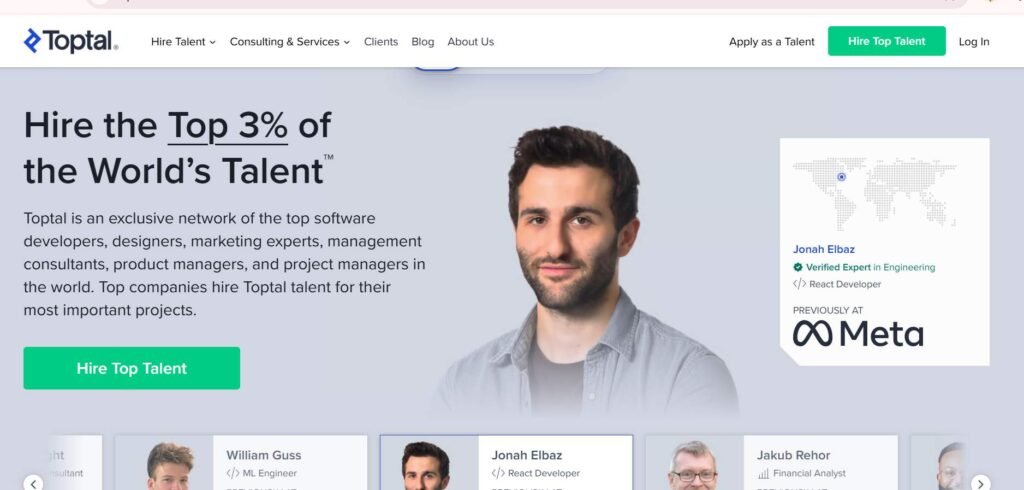
High screening, high pay. Not for beginners. Worth knowing for later — once you have two or three years of documented remote work, these platforms can shift your earnings significantly.
Getting Paid: Working for a Foreign Company from Africa
This is where most guides get vague. Payment is genuinely complicated for many African countries, and the honest answer is: it depends on where you are.
Payoneer
Available in most African countries. Widely accepted on Upwork, Fiverr, and with some direct employers. You can receive USD or EUR and withdraw to a local bank account. Verification can be slow and sometimes requires a government ID plus proof of address. Get this set up before you need it, not when a payment is already waiting.
Wise formerly TransferWise)
Works well in Nigeria, Kenya, Ghana, South Africa, and several other markets. Excellent exchange rates compared to traditional banks. Some employers and clients pay directly via Wise bank details. If you can get a Wise account, it’s often cleaner than Payoneer for direct transfers.
Deel and Remote
These are employer-of-record and contractor management platforms. More companies are using Deel to hire internationally because it handles compliance, tax documentation, and payments in one place. If a company tells you they pay via Deel, that’s a good sign — it usually means they’ve done this before and have a real process.
Crypto (USDT / USDC)
Some freelancers in countries with restricted banking use stablecoin payments. It’s legal in many jurisdictions when properly declared. It requires understanding how to off-ramp to local currency safely. Don’t lead with this option — bring it up only if your client mentions it or you’ve researched the regulations in your country.
AVOID THIS MISTAKE Don’t agree to take payment via PayPal if you’re in a country where PayPal doesn’t support withdrawals — countries like Nigeria, Ghana, and Cameroon among others. You’ll receive the money and then be stuck. Confirm the payment method works end-to-end before starting any job.
The Reality of Working From Africa for a Foreign Company
When you’re actually doing the work — not just getting the job — a few things come up consistently.
Time zones
West Africa (WAT, UTC+1) overlaps well with Europe. East Africa (EAT, UTC+3) overlaps well with parts of the Middle East and Asia. For US companies, the overlap is smaller but manageable. Most async-first companies are fine with a two-to-three hour daily sync window. Be clear about your hours in your application or contract. Don’t pretend to be available when you’re not.
Internet reliability
This matters more than most people admit in public. Dropped calls during client meetings, delayed file uploads, outages during deadline hours — these are real friction points. If you’re serious about remote work, treat your internet connection as a business expense. A mobile backup, a reliable ISP, or co-working space access for critical deliveries are worth the cost.
Tax and compliance
You are generally responsible for declaring your freelance or remote income in your country of residence. Most African countries have income tax requirements that apply to foreign-earned income. This isn’t optional, even if enforcement is inconsistent. Many platforms will also ask for a W-8BEN (for US clients) or similar documentation. Don’t ignore these — filling them out correctly protects you.
A Practical Roadmap: Six Months from Zero to First Contract
This isn’t a guaranteed timeline. It’s a realistic one for someone who’s consistent and has 10 to 15 hours a week to invest.
- Month 1 — Pick your lane — Choose one skill to focus on. Not two, not three. One. The people who scatter across multiple skills in the beginning rarely build strong enough proof of any single one to land work.
- Month 2 — Build the proof — Create three to five portfolio pieces. Real work, even if unpaid. A spec project, a side project, volunteer work for a local NGO or small business. Anything that creates a tangible output you can link to.
- Month 3 — Set up your infrastructure — Profile on Upwork, LinkedIn, and one other platform. Payment accounts set up and tested. A simple personal site or portfolio page. A professional email address. None of this takes long, but do it before you start applying.
- Month 4 — Start applying deliberately — Apply to three to five well-targeted opportunities per week, not thirty generic ones. Personalize every proposal. Your goal this month is one response, not one contract.
- Month 5 — Follow up and refine — Look at what’s getting responses and what isn’t. Adjust your positioning. Ask someone who’s already doing remote work to review your profile and proposals. Fresh eyes catch things you’ve stopped seeing.
- Month 6 — Close your first contract — Your first contract may be small. Take it anyway. Deliver well. A good review on Upwork or a LinkedIn recommendation from a foreign client is worth more than another month of preparing.
Mistakes That Set People Back
A few patterns come up again and again.
Applying before you’re ready. A weak Upwork profile with no work history and a vague bio gets ignored. Worse, it trains the algorithm that your account doesn’t convert. Set up the profile only when you have something to show.
Pricing too low to signal legitimacy. Very low rates often make clients nervous, not excited. Clients who pay $5/hour for a developer aren’t your long-term market anyway. Know what fair market rates look like in your category and anchor near there, even at the start.
Treating payment as an afterthought. Confirm the full payment flow — how you receive, how you withdraw, what fees apply — before you agree to any job. It’s awkward to bring up after you’ve started. It’s much worse to figure out after you’ve delivered.
Not communicating proactively. Foreign clients, especially American ones, interpret silence as a problem. If something is delayed, say so before the deadline. If you’re unsure about requirements, ask before you build the wrong thing. Over-communication is almost never the complaint.
Remote work isn’t magic, and it isn’t easy. But it’s more accessible than it was three years ago, and it keeps getting more so — partly because more companies are building global teams, and partly because the infrastructure for paying and managing African contractors has genuinely improved. The system has gaps and it has real biases. The people who get through it are the ones who understand it clearly enough to navigate it deliberately. That’s what this roadmap is for. The rest is up to you.

Branche writes about remote work and international payment systems as they affect freelancers and online creators across Africa, with an emphasis on accuracy, transparency, and practical understanding.